



Malate Dehydrogenase (MDH)
Malate Dehydrogenase
Malate Dehydrogenase (MDH) is an enzyme that plays a key role in cellular metabolism and belongs to the NAD-dependent dehydrogenase family. Malate Dehydrogenase (MDH) catalyzes the reversible conversion between malate and oxaloacetate. There are multiple subtypes of MDH. In eukaryotes, there are mainly cytoplasmic MDH1, mitochondrial MDH2, and MDH present in peroxisomes, glyoxysomes, and chloroplasts; there is only one MDH in prokaryotes such as Escherichia coli.
MDH1 is closely related to the proliferation and survival of tumor cells, and its high expression is associated with a poor prognosis of non-small cell lung cancer. MDH1 plays an important role in replenishing cytoplasmic NAD to support glycolysis during cell proliferation, and together with lactate dehydrogenase (LDH), maintains the intracellular NAD supply; in cardiovascular disease research, it was found that changes in its activity are related to energy metabolism, oxidative stress and other processes in cardiac tissue. In addition, MDH participates in important metabolic pathways such as the tricarboxylic acid cycle, gluconeogenesis, and amino acid synthesis, and plays a role in different cellular compartments. For example, MDH transports reducing equivalents between the cytoplasm and mitochondria through the malate-aspartate shuttle, maintaining cellular energy metabolism and normal physiological functions[1][2][3][4][5][6].
References:
- [1]. Hanse EA, et al. Cytosolic malate dehydrogenase activity helps support glycolysis in actively proliferating cells and cancer. Oncogene. 2017 Jul 6;36(27):3915-3924. [Content Brief]
- [2]. Todorovic D, et al. Four Weeks of Aerobic Training Affects Cardiac Tissue Matrix Metalloproteinase, Lactate Dehydrogenase and Malate Dehydrogenase Enzymes Activities, and Hepatorenal Biomarkers in Experimental Hyperhomocysteinemia in Rats. Int J Mol Sci. 2021 Jun 24;22(13):6792. [Content Brief]
- [3]. Zhang B, et al. Characterization of the Role of the Malate Dehydrogenases to Lung Tumor Cell Survival. J Cancer. 2017 Jul 5;8(11):2088-2096. [Content Brief]
- [4]. Musrati RA, et al. Malate dehydrogenase: distribution, function and properties. Gen Physiol Biophys. 1998 Sep;17(3):193-210. [Content Brief]
- [5]. Minárik P, et al. Malate dehydrogenases--structure and function. Gen Physiol Biophys. 2002 Sep;21(3):257-65. [Content Brief]
- [6]. Park SJ, et al. Regulation of malate dehydrogenase (mdh) gene expression in Escherichia coli in response to oxygen, carbon, and heme availability. J Bacteriol. 1995 Nov;177(22):6652-6. [Content Brief]
All Product Categories
-
Malate Dehydrogenase (MDH) Related Products (10)
Related Products (10)

-
MDH1-IN-2
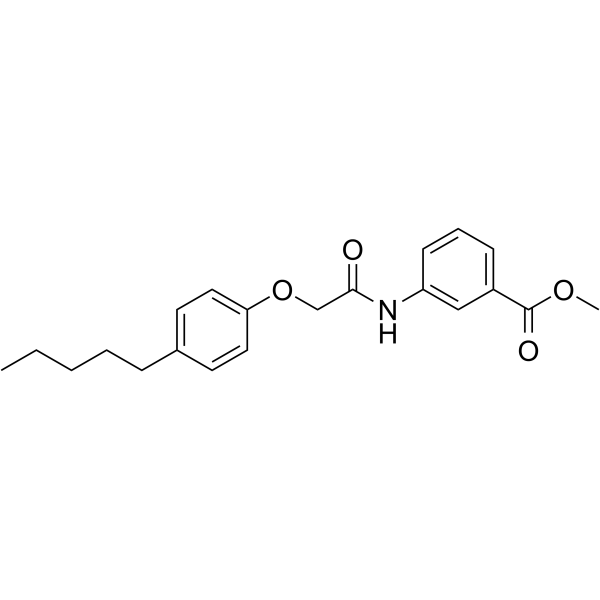
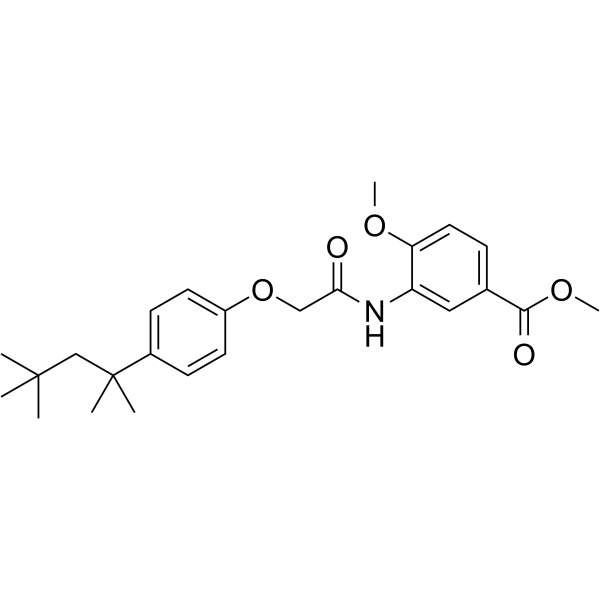 0 ImagesMDH1-IN-2 (Compound 7c) is a selective MDH1 inhibitor, with IC50 values of 2.27 and 27.47 μM for MDH1 and MDH2, respectively. MDH1-IN-2 can reduce the generation of ROS by inhibiting the conversion of 2-Ketoglutaric acid (HY-W013636) to α-Hydroxyglutaric acid (HY-113038B) mediated by MDH1, thereby suppressing 2-Ketoglutaric acid (HY-W013636)-induced ferroptosis.
-
Malic dehydrogenase, microorganism
 0 ImagesMalate dehydrogenase (EC 1.1.1.37) (MDH) catalyzes the mutual conversion of oxaloacetate and malate, and is associated with the oxidation/reduction of dinucleotide coenzymes.
-
MDH1/2-IN-1
 0 ImagesMDH1/2-IN-1 is a MDH1/2 inhibitor (IC50: 1.07 μM and 1.06 μM respectively). MDH1/2-IN-1 inhibits mitochondrial respiration and the HIF-1α pathway. MDH1/2-IN-1 demonstrates significant anti-tumor potential. MDH1/2-IN-1 provides a new direction for the development of drugs targeting cancer metabolism.
-
MS6105
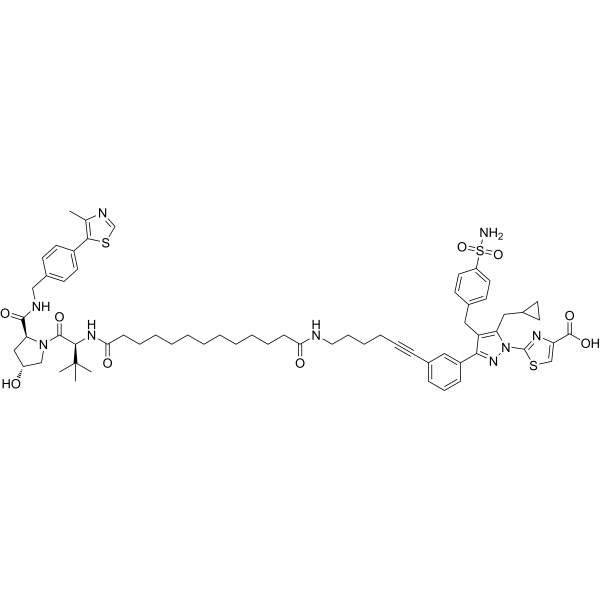 0 ImagesMS6105 is a PROTAC degrader targeting LDHA and LDHB, with DC50 values of 38 nM and 74 nM for degrading LDHA and LDHB in PANC-1 cells, respectively, and no hook effect is observed at high concentrations. MS6105 inhibits the proliferation of pancreatic cancer cells, and no obvious toxicity is observed after intraperitoneal administration in mice. MS6105 can be used for pancreatic cancer-related research.
-
MDH2-IN-2
 0 ImagesMDH2-IN-2 is an orally active MDH2 inhibitor with an IC50 of 5.9 μM. MDH2-IN-2 reduces the levels of senescence markers and senescence-associated secretory phenotype (SASP) factors in mammalian cell models. MDH2-IN-2 extends the lifespan and improves the healthspan of Caenorhabditis elegans. MDH2-IN-2 alleviates tissue senescence in aged mice, inhibits SASP factors, and restores liver and kidney functions. MDH2-IN-2 is applicable for senescence-related research.
-
Malate dehydrogenase (oxaloacetate-decarboxylating, NADP+)
 0 ImagesMalate dehydrogenase (oxaloacetate-decarboxylating, NADP+) is a redox agent targeting metabolic pathways. Malate dehydrogenase (oxaloacetate-decarboxylating, NADP+) catalyzes the reduction of oxaloacetate to malate in leaves of higher plants. Malate dehydrogenase (oxaloacetate-decarboxylating, NADP+) is promising for research of metabolic diseases, such as diabetes, obesity.
-
Malate Dehydrogenase,Yeast
 0 ImagesCat. No.: HY-P3001AMalate dehydrogenase, Yeast (EC 1.1.1.37) is an enzyme in the citric acid cycle that catalyzes the conversion of malate to oxaloacetate (requiring NAD+). Malate dehydrogenase participates in gluconeogenesis, the process of synthesizing glucose from small molecules.

-
Malate Dehydrogenase, Porcine
 0 ImagesCat. No.: HY-P3001BMalate dehydrogenase, Porcine, is a dehydrogenase that catalyzes the conversion of malate to oxaloacetate.



